
Custom
Silicone Buttons
Built to Your Exact Spec
Custom-molded silicone buttons engineered around your product structure, assembly requirements, tactile reference, color standard, and production volume.
From DFM review and mold development to signed sample approval and batch inspection, Pandasoft helps turn your button requirements into a controlled mass-production project.
- Engineering Review
- Material & Mold Evaluation
- Signed Sample Approval
- Batch Quality Control

Explore Silicone Button Applications
Explore custom silicone buttons and keypads for industrial control panels, measurement instruments, access systems, handheld controllers, remote controls, and other OEM device interfaces.

Industrial Control Panel Buttons
Custom buttons for machine and equipment control panels where reliable fit and repeatable operation matter.
LEARN MORE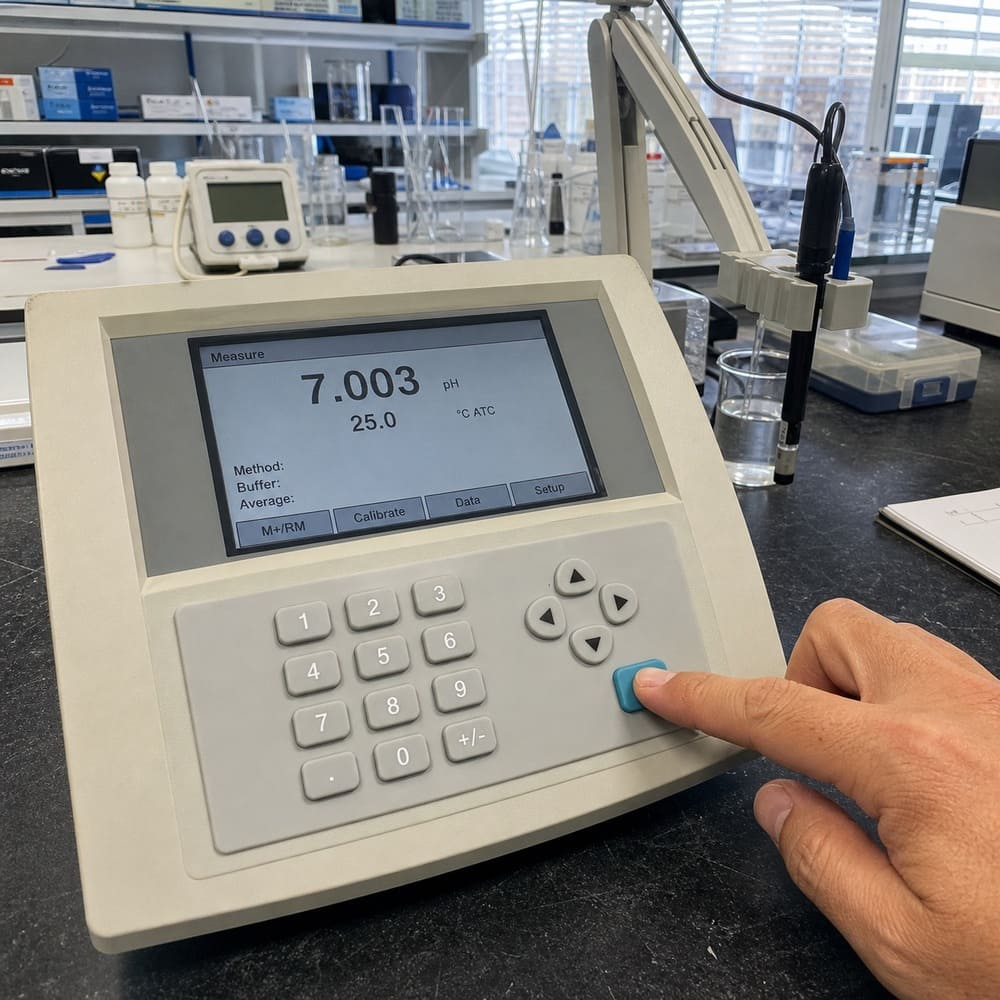
Measurement & Test Instrument Keypads
Keypads for instruments that require clear input, controlled dimensions, and consistent operator response.
LEARN MORE
Access Control & Entry Panels
Custom buttons for access-control, entry, and door-panel interfaces with frequent-use requirements.
LEARN MORE
Handheld Controller Keypads
Compact keypads for portable OEM controllers where comfortable operation and housing integration are important.
LEARN MORE
Remote Control Button Mats
Silicone button mats for remote-control interfaces that need stable key layout and consistent user interaction.
LEARN MORE
Custom OEM Device Interfaces
Custom single buttons and multi-key interfaces for OEM products with specialized control or assembly requirements.
LEARN MOREWhat Makes a High-Performance Silicone Button
A truly high-performance silicone button isn't about a vague sense of "quality" -- it's a set of measurable parameters that must be controlled and locked into your drawing. Get these four areas right, and you get a button that feels right, fits right, looks right, and does its job. Here's what Pandasoft controls.

Tactile Feel & Return
Feel is engineered, not guessed.
For demanding feel: We can build dual-durometer structures that noticeably sharpen the click.
Dimensions & Assembly Fit
Controls what makes or breaks assembly.
Silicone is highly elastic, so shrinkage and molding conditions matter -- the key is controlling what's critical.
Key-to-key spacing is prioritized over edge distance -- more critical for aligning to your PCB and housing.
Dimensions are referenced from a stable, repeatable datum rather than theoretical centers.
For larger keypads we design in stretching joints to absorb assembly tolerance.
Stabilizers (stop bars) prevent keytop wobble when the contact is smaller than the key.
The result drops straight into your enclosure.


Color & Cosmetics
Brand consistency and yield, not just looks.
Colors locked to RAL / Pantone / NCS for both key body and legend to eliminate batch-to-batch variation.
Controlled color bleeding between adjacent or multi-color keys -- the most common cosmetic defect.
Multiple durometers or colors on a single key available.
Silk-Screen
Printing
Laser Etching
Backlight-ready
Protective
Coating
Application-Specific Performance
Where a general button becomes a high-performance one.

Ready to specify your button?
Have a feel target, a cycle-life spec, or a contact type in mind?
Send us your actuation force, snap ratio, contact method, and operating environment -- Pandasoft will engineer a silicone button that hits every number.
3 Silicone Button
Manufacturing Processes
Understanding which process fits your project requirements -- from tooling cost and precision to volume and application -- is the first step to a successful custom button.
Compression Molding
(HCR / Solid Silicone)Solid high-consistency rubber (HCR) is pre-formed, placed in an open mold, and compressed under heat and pressure to cure into shape. The most established and cost-efficient silicone process -- tooling is simple, material cost is low, and it handles a wide range of part sizes and durometers well. Semi-automated cycles run 5-10 minutes; flash trimming is required post-cure.
LSR Injection Molding
(Liquid Silicone Rubber)Two-part liquid silicone (platinum-cured) is precisely metered, mixed, and injected into a hot mold (~250-300°C) in a fully closed, contamination-free system. Its fluid nature fills the finest cavities and reproduces ultra-thin walls and intricate detail (walls down to ~0.25 mm). Fast, highly automated cycles suit large-scale production. Platinum cure leaves no molecular byproducts -- ideal for medical, baby-care, and food-contact parts. Higher tooling and material cost are best justified at volume.
Multi-Shot / Overmolding
(Dual-Durometer & Substrate)An advanced step built on the above -- combining two hardnesses, two colors, or silicone with a substrate (plastic keytop, PCB) in one part. Dual durometer (soft core + firm body) noticeably sharpens tactile feel; multi-color meets branding and legend needs while controlling color bleed; overmolding integrates the button with structural or electronic parts. Tooling is the most complex of the three, but delivers unmatched feel and cosmetic performance.
| Dimension |
Compression (HCR)
|
LSR Injection
|
Multi-Shot / Overmold
|
|---|---|---|---|
| Raw Material | Solid HCR | Two-part liquid LSR | HCR / LSR combination |
| Tooling Cost | Low | High Single-cavity ~$500-5,000; complex/multi up to ~$20,000 | Highest |
| Per-Unit Cost | Lowest at small-medium volume | Lowest at high volume (fast cycles offset tooling) | Higher (premium parts) |
| Precision / Detail | Medium | High Ultra-thin walls, intricate geometry | High |
| Cycle / Automation | Slower, semi-automated (~5-10 min) | Fast, highly automated Seconds per cycle | Medium |
| Best Volume Fit | Low-to-high, cost-efficient | Medium-to-high volume | Premium custom runs |
| Typical Applications |
Remotes
Appliances
Industrial
Conductive Keypads
|
Medical
Clean Electronics
Sealed / IP-Rated
High-Precision
|
Consumer Electronics
Premium Remotes
Automotive Controls
|
* Tooling cost estimates are indicative and vary by part complexity, cavity count, and material grade. Contact us for a project-specific quote.
Not sure which process fits your button project?
Share your drawings or requirements and our engineering team will recommend the right process -- with DFM feedback and a tooling cost estimate.
A Factory Built for
Controlled Custom Production
Custom silicone parts require more than a mold. They require coordinated engineering review, production control, quality inspection, and reliable capacity from sample approval through repeat orders.


Factory Data
Quality System
Material & Compliance
REACH and RoHS support is available according to project requirements. UL 94 flame-retardant material support can be provided when required.
Capacity Note -- Project-specific capacity and delivery schedules are confirmed after reviewing the part structure, process, quantity, and quality requirements.
Quality Testing for
Custom Industrial Silicone Parts
Every custom industrial silicone order follows controlled quality checks, covering raw material testing, dimensional inspection, hardness testing, mechanical performance tests, in-process inspection, final inspection, and compliance support for industrial applications.

Dimension Inspection

Shore A Hardness Testing

Tensile Strength Testing

Tear Strength Testing

Compression Set Testing

Heat Aging Testing

Color Difference Testing

Visual Defect Inspection
Turn Your Button Design Into an
Approved Production Standard
Send your drawing, dimensions, and reference requirements. We review the material, tooling, molding process, and key tolerances, then confirm fit, feel, and appearance through an approved sample before mass production.
Share Your Requirements
Drawings, critical dimensions, assembly information, color reference, tactile reference, functional requirements, and order quantity.
Engineering Review
DFM, material suitability, tolerance feasibility, mold requirements, and molding process evaluation.
Approve & Produce
Confirm fit, feel, color, and inspection points. Approve the sample, then release mass production against the agreed standard.
Plan Your Custom Silicone Button Order
MOQ and lead time depend on the tooling path, button structure, material, quantity, and production requirements.
Existing Mold Project
Suitable when an available mold matches the required structure, dimensions, material, and quality standard.
New Custom Mold Project
Required when your button design needs a new structure, size, material, color, or performance standard.
-
Existing mold projects: from 500 pcs
-
New custom mold projects: typically 500-1,000 pcs
-
Custom packaging: from 1,000 pcs when required
Qualified B2B trial orders are available for suitable projects.
New Mold Development
15-20 days
Typically
Sample Delivery by Express
6-8 days
Typically
Mass Production
2-4 weeks
After sample approval
Note: Final MOQ and lead time are confirmed after reviewing the drawing, tooling requirement, material, quantity, and approval standard.
Send Your Files for ReviewFrequently Asked Questions
Questions Before Starting a Custom Silicone Button Project.
What information should I provide for a custom silicone button quotation?
Can you evaluate a project if I do not have a complete drawing?
How do you confirm button feel and rebound?
Can every button be produced to ±0.05 mm tolerance?
Do you support multi-color or overmolded silicone buttons?
What if my project requires conductive contact, sealing, or service-life testing?
What is the MOQ?
How long does a custom project take?
Can you support REACH, RoHS, and flame-retardant requirements?
How is batch quality controlled after sample approval?
Get a Free Quote for Your Custom Industrial Silicone Parts
Send us your drawing, sample, photo, or technical requirements. Our engineering team will review your project and provide a practical mold feasibility review and factory quote within 12 hours.
- Free Mold Feasibility Review & Quote
- Direct Factory Pricing
- 12-Hour Expert Response
- Direct Factory Support, No Aggressive Follow-Ups
- Free Samples Available Upon Review
Mold Feasibility Review & Factory Quote
Engineer response within 12h.
Free review for your drawing, sample, material, hardness, tolerance, working environment, and project requirements.